1. Different Wavelengths Reveal Different Things:
* Visible Light: Limited to a narrow band of wavelengths, it shows us the light emitted by stars, planets, and nebulae.
* Infrared: Penetrates dust clouds and reveals cool objects like forming stars, exoplanets, and the early universe.
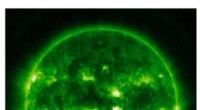
* Ultraviolet: Shows us hot, energetic objects like supernova remnants, active galactic nuclei, and the surfaces of stars.
* X-ray: Reveals the hottest and most energetic phenomena in the universe, like black holes, neutron stars, and galaxy clusters.
* Gamma Ray: Detects the most energetic events in the universe, such as gamma-ray bursts, supernova explosions, and active galactic nuclei.
2. Seeing Through Obstacles:
* Infrared: Can penetrate dust clouds that block visible light, allowing us to study star formation and galactic centers.
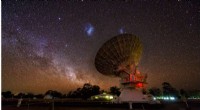
* Radio Waves: Can travel through interstellar gas and dust, allowing us to study distant galaxies, pulsars, and the cosmic microwave background.
3. Understanding Composition and Processes:
* Spectroscopy: By analyzing the wavelengths of light emitted or absorbed by objects, we can determine their composition, temperature, and velocity.
* Doppler Shift: Shifting wavelengths indicate an object's movement towards or away from us, revealing its motion and the expansion of the universe.
4. A Broader Perspective:
* The universe is vast and diverse, with many objects emitting light primarily outside the visible spectrum.
* Studying the full electromagnetic spectrum gives us a much more complete picture of the universe.
Examples of Discoveries Made Using Other Wavelengths:
* Infrared: Discovery of brown dwarfs, which are too cool to emit visible light, and exoplanets.
* X-ray: Detection of black holes and the observation of active galactic nuclei.
* Radio Waves: Mapping of the cosmic microwave background, which provides evidence for the Big Bang.
In summary, examining the universe using the full electromagnetic spectrum allows us to:
* See beyond the visible light.
* Study a wider range of objects and phenomena.
* Gain a deeper understanding of the universe's composition and processes.
It's like having a toolbox of different "lenses" to view the universe, each revealing unique and valuable information.