Major Features:
* Maria (Latin for "seas"): These dark, smooth plains were once vast lava flows that erupted and filled impact craters billions of years ago. They are actually not seas, but rather solidified lava, giving them a smooth appearance.
* Highlands: These light-colored, rugged mountains are the oldest parts of the Moon's surface. They are heavily cratered and represent the original crust formed early in the Moon's history.
* Craters: These bowl-shaped depressions are formed by impacts from asteroids, meteoroids, and comets. The size and shape of craters can vary greatly, from tiny pits to massive impact basins.
* Rays: These bright streaks of ejecta, the material thrown out during an impact, radiate outwards from some craters.
* Rilles: These long, winding channels are thought to have formed by flowing lava or by the collapse of underground tunnels.
* Regolith: This layer of loose, broken rock and dust covers most of the Moon's surface. It is formed by impacts and other weathering processes.
Composition:
The Moon's surface is primarily composed of:
* Rock: Mostly basalt, anorthosite, and breccia.
* Dust: Fine-grained regolith, containing a mix of rock fragments, minerals, and glass.
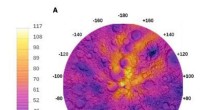
* Ice: Small amounts of water ice are found in permanently shadowed craters at the poles.
Key Characteristics:
* Lack of atmosphere: The Moon has no substantial atmosphere, leaving its surface exposed to the harsh vacuum of space. This leads to extreme temperature swings between day and night.
* No erosion: Without an atmosphere and liquid water, there is minimal erosion on the Moon's surface. This preserves craters and other features for long periods.
* Low gravity: The Moon's gravity is about 1/6th that of Earth, resulting in a unique "moonwalk" for astronauts.
Exploration:
The Moon has been explored by numerous spacecraft, including robotic missions and crewed landings. These missions have provided valuable insights into the Moon's geology, composition, and history.
The Moon's surface continues to be a subject of scientific interest, and future missions are planned to further explore its mysteries.