1. Telescopes:
* Optical Telescopes: These telescopes collect visible light from celestial objects, allowing us to see stars, galaxies, planets, and other objects in the universe. Examples include the Hubble Space Telescope and the Very Large Telescope.
* Radio Telescopes: These telescopes detect radio waves emitted from space, revealing information about distant galaxies, black holes, and the early universe. Examples include the Arecibo Observatory and the Atacama Large Millimeter/submillimeter Array (ALMA).
* Infrared Telescopes: These telescopes detect infrared radiation, which can penetrate dust clouds and reveal hidden objects. Examples include the Spitzer Space Telescope and the James Webb Space Telescope.
* X-ray Telescopes: These telescopes detect X-rays, which are emitted from extremely hot objects like black holes and supernova remnants. Examples include the Chandra X-ray Observatory and the XMM-Newton.
* Gamma-ray Telescopes: These telescopes detect gamma rays, the highest-energy form of light, revealing information about the most energetic events in the universe. Examples include the Fermi Gamma-ray Space Telescope and the Compton Gamma Ray Observatory.
2. Spacecraft:
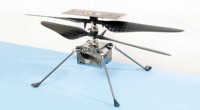
* Orbiting Spacecraft: These spacecraft travel around planets, moons, or the Sun, gathering data and taking images. Examples include the International Space Station, the Voyager probes, and the Mars rovers.
* Space Probes: These spacecraft fly by, orbit, or land on celestial objects to study their composition, atmosphere, and geology. Examples include the Cassini-Huygens mission to Saturn, the New Horizons mission to Pluto, and the Juno mission to Jupiter.
3. Computer Models and Simulations:
* Scientists use powerful computers to create models and simulations of the universe, which help them understand the formation and evolution of galaxies, stars, and planets.
4. Lab Experiments:
* Scientists conduct experiments in labs to study the properties of materials found in space, such as meteorites and dust particles.
5. Data Analysis:
* Scientists analyze data collected from telescopes, spacecraft, and other sources to uncover new insights about the universe.
These methods, combined with the ingenuity and dedication of scientists, are constantly advancing our understanding of space and its mysteries.