1. Clusters: These are collections of hundreds to thousands of stars held together by gravity. Examples include the Pleiades and the Hyades.
2. Planetary Systems: A planetary system consists of a star and the celestial objects orbiting it (planets, moons, asteroids, etc.). Our own Solar System is an example.
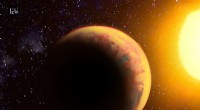
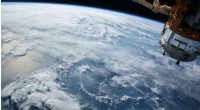
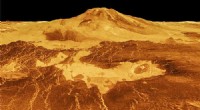
3. Planets: Large celestial bodies orbiting stars, massive enough to have cleared their orbital paths of other objects.
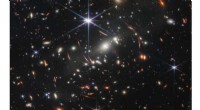
4. Galaxies: Vast collections of billions of stars, gas, dust, and dark matter held together by gravity. Our Milky Way is an example.
5. Galaxy Groups: Clusters of a few to several dozen galaxies gravitationally bound together. The Local Group, which contains the Milky Way and Andromeda galaxies, is an example.
6. Star Clusters: These are collections of stars that formed from the same cloud of gas and dust. There are two types: open clusters (loosely bound, young) and globular clusters (tightly bound, old).
7. Superclusters: The largest known structures in the universe, consisting of clusters and groups of galaxies bound together by gravity. Our own Milky Way is part of the Laniakea Supercluster.