1. Nebula Stage:
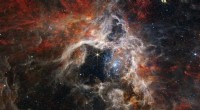
* The Sun began its life as part of a vast cloud of gas and dust called a nebula.
* This cloud was primarily composed of hydrogen and helium, the most abundant elements in the universe.
* Over time, the nebula began to collapse under its own gravity, attracting more and more material.
2. Protostar Stage:
* As the nebula collapsed, the material within it became denser and hotter.
* This core eventually reached a temperature of around 10 million degrees Celsius, which is the threshold for nuclear fusion to begin.
* This stage is known as the protostar stage.
3. Main Sequence Stage:
* Once nuclear fusion began, the Sun entered the main sequence stage.
* During this stage, the Sun fuses hydrogen into helium in its core, releasing a tremendous amount of energy in the process.
* This energy is what makes the Sun shine and provides Earth with light and warmth.
* The Sun is currently in the main sequence stage, and it's expected to remain there for about 10 billion years.
4. Red Giant Stage:
* When the Sun runs out of hydrogen in its core, it will start fusing helium into heavier elements, like carbon and oxygen.
* This process will cause the Sun to expand significantly, becoming a red giant.
* It will engulf Mercury and Venus, and potentially even Earth.
5. Planetary Nebula Stage:
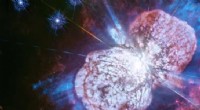
* As the Sun expands further, it will shed its outer layers into space, forming a beautiful, glowing cloud of gas called a planetary nebula.
* The core of the Sun, now a white dwarf, will be left behind.
6. White Dwarf Stage:
* The white dwarf is the final stage of the Sun's life cycle.
* It is a small, dense, and incredibly hot remnant of the star's core.
* White dwarfs will slowly cool down over billions of years, eventually becoming a cold, dark black dwarf.
Key Points about the Sun's Life Cycle:
* The Sun's life cycle is driven by nuclear fusion.
* Each stage is characterized by different processes occurring within the star.
* The Sun is a relatively small star, which means it will have a longer main sequence stage than larger stars.
* The Sun's life cycle is a natural process that happens to all stars of similar size and mass.
Understanding the Sun's life cycle helps us learn more about how stars are born, evolve, and eventually die, giving us a better understanding of the universe we live in.