Here's a breakdown:
* Liquid water is essential for life as we know it. It acts as a solvent, allowing for chemical reactions and transport of nutrients.
* The habitable zone is not a fixed distance. It depends on the star's size, temperature, and luminosity. A hotter star will have a larger habitable zone than a cooler star.
* It's also important to consider other factors:
* Planet's atmosphere: A planet's atmosphere can trap heat and influence its surface temperature.
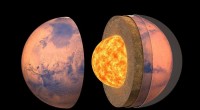
* Planet's internal heat: Some planets generate their own internal heat, which can influence surface temperatures.
* Planet's size and composition: These factors determine how well a planet can hold onto an atmosphere.
It's crucial to remember that the habitable zone is not necessarily the "Goldilocks zone" where life is guaranteed to exist. It simply represents a region where conditions are potentially suitable for liquid water.