For a general audience:
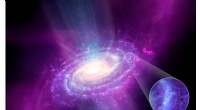
* A vast, spiral-shaped island of stars, gas, and dust, containing billions of stars, including our own Sun. This is a concise and accurate description.
* Our cosmic home, a giant, spinning disk of stars, planets, and nebulae, stretching across the night sky. This emphasizes our place in the galaxy and its grandeur.
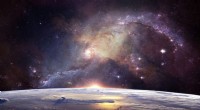
* A breathtaking swirl of light across the night sky, revealing a glimpse of the countless stars that populate our galaxy. This focuses on the visual appeal and the vastness of the Milky Way.
For a more scientific audience:
* A barred spiral galaxy with a central bulge, a disk, and spiral arms, containing about 200 billion stars and a supermassive black hole at its center. This provides a detailed description of the galaxy's structure and key features.
* A gravitationally bound system of stars, gas, dust, and dark matter, with a diameter of about 100,000 light-years and a mass of about 1 trillion solar masses. This emphasizes the physical properties and the role of dark matter in its formation.
* An active galaxy with ongoing star formation, a complex magnetic field, and a history of galactic mergers, showcasing the dynamic nature of galaxies. This highlights the Milky Way's ongoing evolution and interactions with other galaxies.
Ultimately, the best way to describe the Milky Way galaxy is to choose a description that is appropriate for your audience and the context in which you are using it.