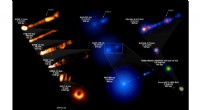
* Supermassive Black Holes: These are the giants of the black hole world, found at the centers of galaxies. They can have masses millions or even billions of times that of our Sun. While technically not "objects" in the traditional sense, they are incredibly dense regions of spacetime that exert a powerful gravitational pull on their surroundings.
* Giant Molecular Clouds: These are colossal clouds of gas and dust, spanning hundreds of light-years. They are the birthplaces of stars and are incredibly massive. Some of the largest known molecular clouds, like the Sagittarius B2 cloud, are estimated to contain the mass of tens of thousands of Suns.
* Superclusters of Galaxies: These are the largest known structures in the universe, comprising hundreds or even thousands of galaxies bound together by gravity. They can span hundreds of millions of light-years. While they are not single objects, they are vast collections of matter that are gravitationally linked.
Ultimately, the "largest" object depends on how you define "object" and what criteria you use to measure size. Do you mean by mass, volume, or even the area they encompass? It's a fascinating question to consider!