1. The Beginning: A Giant Molecular Cloud
* The Sun's journey began within a vast, cold, and dense cloud of gas and dust called a giant molecular cloud. These clouds are the nurseries for stars.
2. Gravity Takes Hold
* Within the cloud, tiny fluctuations in density created regions with slightly more matter.
* Gravity, ever the master of attraction, drew more and more material towards these dense regions, causing them to collapse.
3. Spinning and Heating
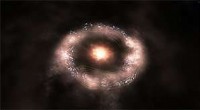
* As the collapsing cloud spun faster, it flattened into a disk shape. This spinning action, combined with the increasing density, generated immense heat.
4. Nuclear Fusion Ignites
* At the heart of this collapsing disk, the temperature and pressure reached unimaginable levels. This is when the magic happened.
* Hydrogen atoms, the most abundant element in the universe, were forced together under immense pressure. This process, known as nuclear fusion, released a tremendous amount of energy.
5. Birth of the Sun
* This burst of energy pushed back against the collapsing material, creating a balance. The Sun was born.
* The Sun's core became a nuclear furnace, constantly converting hydrogen into helium, releasing energy that powers the Sun and bathes our solar system in light and warmth.
6. The Sun Today
* The Sun is now a middle-aged star, about halfway through its estimated 10-billion-year lifespan.
* It will continue to burn hydrogen for billions of years, eventually evolving into a red giant before finally becoming a white dwarf.
Key Concepts:
* Gravity: The force that drove the collapse of the cloud.
* Nuclear Fusion: The process that powers the Sun, where hydrogen atoms fuse to create helium, releasing energy.
* Giant Molecular Cloud: The birthplace of stars, containing vast amounts of gas and dust.
A Note on Time: This process took a very, very long time – millions of years from the initial collapse to the Sun's ignition.