* Stars are incredibly hot: Stars are massive balls of burning gas, reaching temperatures of millions of degrees. Even the most heat-resistant materials would instantly vaporize upon contact.
* Stars are made of plasma: The matter in stars isn't solid like the moon's surface. It's in a state called plasma, where atoms are stripped of their electrons. A spacecraft wouldn't have a solid surface to land on.
* Stars have immense gravity: Stars have much stronger gravitational pull than the moon. It would be extremely difficult, if not impossible, to land a spacecraft and then escape the star's gravity.
* The radiation is lethal: Stars emit massive amounts of radiation, far beyond what humans can survive.
In short, the conditions on a star are far too extreme to allow for any kind of landing. Even if we could overcome the heat and radiation, the physics of stars simply wouldn't allow for a landing as we know it.
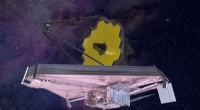
While we can't land on stars, we can study them from afar using telescopes and space probes. These methods allow us to learn a great deal about these fascinating celestial objects.