* Vast Size and Diversity: The Milky Way is incredibly large, spanning tens of thousands of light-years. It contains diverse environments, from the intensely hot cores of stars to the frigid emptiness of interstellar space.
* Temperature Varies by Location:
* Star Cores: Millions of degrees Celsius.
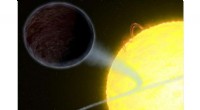
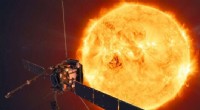
* Stellar Surfaces: Thousands of degrees Celsius.
* Interstellar Gas and Dust: Ranges from a few degrees Kelvin (-270 degrees Celsius) to tens of thousands of Kelvin.
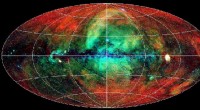
* Galactic Center: Extremely hot, with temperatures reaching millions of degrees due to the supermassive black hole and dense star clusters.
* Outer Regions: Much cooler, with temperatures closer to the background cosmic microwave radiation (around 2.7 Kelvin, or -270 degrees Celsius).
Instead of an average, here's a better way to think about the Milky Way's temperature:
* Temperature is highly localized: Each region of the Milky Way has its own temperature, depending on the specific objects and processes present.
* The galaxy is mostly empty space: The vast majority of the Milky Way is filled with a near-vacuum, so trying to calculate an average temperature doesn't make much sense.
So, while it's impossible to give a single average temperature, understanding the diverse range of temperatures across the Milky Way is essential for understanding its complex workings.