1. Stellar Nebula: A star's life begins within a giant cloud of gas and dust called a nebula. Gravity pulls this material together, forming a dense core.
2. Protostar: As the core collapses, it heats up and starts to glow, becoming a protostar.
3. Main Sequence: The protostar continues to collapse until nuclear fusion starts in its core, where hydrogen atoms fuse to form helium. This process releases tremendous energy, balancing the inward pull of gravity, and the star enters its main sequence stage. The Sun is currently in this stage.
4. Red Giant: Eventually, the hydrogen fuel in the core runs out. The core contracts, heats up, and ignites hydrogen fusion in a shell around the core. This causes the star to expand greatly, becoming a red giant.
5. Planetary Nebula (for Sun-like stars): After the red giant phase, the Sun will shed its outer layers, forming a planetary nebula. The core will remain as a white dwarf, a dense, hot remnant.
Key points:
* The Sun's life cycle is a single, continuous process.
* The Sun is not currently in two stages of its life cycle.
* The Sun's future evolution will involve the red giant and planetary nebula phases.
It's possible you're thinking of a different concept, like:
* Binary stars: Some stars exist in pairs, orbiting each other. One star might be in a later stage of its life cycle than the other, creating a system with two distinct stars.
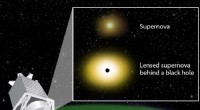
* Supernovae: Larger stars go through different stages than Sun-like stars, eventually exploding as supernovae. These explosions can trigger the formation of new stars and planets.
Let me know if you have another question about stellar evolution or if you'd like clarification on any of these points!