1. Stellar Parallax:
* This is the most direct method for measuring distances to nearby stars.
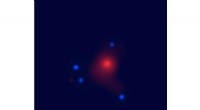
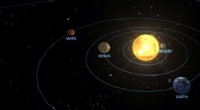
* As Earth orbits the Sun, nearby stars appear to shift slightly against the background of more distant stars.
* The amount of this shift, called parallax, is directly related to the star's distance.
* The further away the star, the smaller the parallax.
2. Standard Candles:
* Some celestial objects, like certain types of supernovae (exploding stars) or Cepheid variable stars, have a known, predictable brightness.
* By comparing their apparent brightness in the sky to their known absolute brightness, astronomers can calculate their distances.
* This method works for both stars and galaxies.
3. Spectroscopic Parallax:
* This method uses the relationship between a star's spectral type (its color and temperature) and its absolute magnitude (intrinsic brightness).
* By comparing the star's spectrum with the known spectral types of stars, astronomers can estimate its absolute magnitude.
* Then, they can determine the distance using the star's apparent magnitude (how bright it appears to us).
4. Comparing Relative Motions:
* Planets move much faster across the sky than stars.
* This is because they are much closer to us and orbit the Sun.
* By tracking the motion of celestial objects over time, scientists can differentiate between planets and stars.
5. Observing Brightness Changes:
* Planets reflect sunlight, and their brightness changes as they move through their orbits.
* Stars, on the other hand, emit their own light, and their brightness remains relatively constant unless they experience a major event like a supernova.
6. Observing Physical Properties:
* Planets have physical properties like atmospheres, rings, and moons, which are not present in stars.
* These characteristics are readily observable with telescopes and help distinguish planets from stars.
In summary, scientists use a combination of these techniques, along with other observations and calculations, to determine the relative distances of planets and stars. These methods have provided us with a vast understanding of the size and scale of our universe.