| Rank | Star Name | Distance (light-years) | Surface Temperature (K) | Spectral Type |
|---|---|---|---|---|
| 1 | Proxima Centauri | 4.24 | 3,042 | M5.5 Ve |
| 2 | Alpha Centauri A | 4.37 | 5,260 | G2 V |
| 3 | Alpha Centauri B | 4.37 | 5,000 | K1 V |
| 4 | Barnard's Star | 5.96 | 3,137 | M4.0 V |
| 5 | Wolf 359 | 7.86 | 2,800 | M6.5 Ve |
| 6 | Lalande 21185 | 8.29 | 3,540 | M2 V |
| 7 | Sirius A | 8.60 | 9,940 | A1 V |
| 8 | Sirius B | 8.60 | 25,200 | DA2 |
| 9 | Luyten 726-8 A | 8.73 | 3,380 | M5.5 Ve |
| 10 | Luyten 726-8 B | 8.73 | 3,300 | M6.0 Ve |
Notes:
* K stands for Kelvin, the standard unit for temperature.
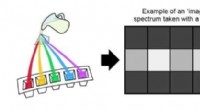
* Spectral Type is a classification based on the star's temperature, color, and chemical composition.
* Sirius B is a white dwarf, which are incredibly dense and hot remnants of stars.
* This list only includes stars visible to the naked eye. There are many other fainter, closer stars.
As you can see, the closest stars are mostly red dwarfs (spectral types M) which are relatively cool. Sirius A is the hottest star on this list. It's a main-sequence star, just like our Sun, but it is much hotter and brighter.