Here's why:
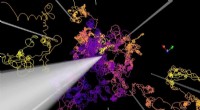
* Interstellar gas and dust: The ISM is made up of gas (mostly hydrogen and helium) and dust particles. These particles absorb and scatter light, giving the ISM a bluish hue.
* Scattered starlight: Blue light from stars is scattered more effectively by interstellar dust than other colors. This phenomenon, known as Rayleigh scattering, is the same reason why the sky appears blue during the day.
* Imaging techniques: Astronomical images often use color filters and processing to enhance specific features. This can make the interstellar medium appear more blue in some images.
While the ISM isn't always blue, it's a crucial component of the galaxy, playing a role in star formation and the evolution of galaxies.