Here's a breakdown:
1. Sunspots:
* These are cooler areas on the Sun's surface. They appear dark because they emit less light than the surrounding hotter regions.
* They are caused by intense magnetic fields that suppress the flow of hot plasma from the Sun's interior.
* Sunspots are temporary, appearing and disappearing over time.
* Important Note: Sunspots are not "dark" in the sense of being black, but they appear darker compared to the rest of the Sun's surface.
2. Starspots:
* While we see sunspots on our Sun, similar phenomena can occur on other stars.
* These "starspots" are cooler areas on the star's surface, similar to sunspots.
* They are typically much larger than sunspots and can even be detected from Earth.
* We can't directly see starspots as we do with the Sun, but we can observe their effects on the star's light.
3. Transiting Planets:
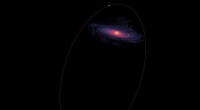
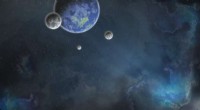
* When a planet passes in front of a star from our viewpoint, we see a slight dip in the star's brightness. This dip is not a "dark spot" on the star itself, but rather the planet blocking some of its light.
* This technique is used to detect exoplanets, planets orbiting other stars.
It's important to distinguish between:
* Physical "dark spots" on the star's surface (like sunspots and starspots).
* Dark spots due to a phenomenon in front of the star (like a transiting planet).
Let me know if you have any further questions!