Here's how it works:
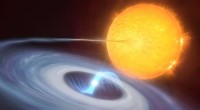
* Stars are giant fusion reactors: Stars generate energy by fusing lighter elements into heavier ones.
* Early stages of stellar life: In the early stages of a star's life, hydrogen atoms fuse to form helium.
* Later stages: As a star ages and its core becomes hotter and denser, heavier elements are formed.
* Magnesium formation: During this later stage, helium nuclei fuse to form carbon, and carbon nuclei then fuse with helium to form oxygen. Further fusion processes, involving carbon, oxygen, and neon, ultimately lead to the production of magnesium.
So, magnesium is a byproduct of the complex and powerful nuclear reactions that take place within stars throughout their lifecycles.