Methods
* Space-Based Telescopes:
* X-Ray Detectors: These are the primary tools for studying solar X-rays. They employ specialized materials that absorb X-rays and produce measurable signals.
* Proportional Counters: These detectors use a gas filled chamber to detect X-rays. The gas ionizes when hit by an X-ray, generating a pulse proportional to the energy of the X-ray.
* Scintillation Counters: These detectors use a material that fluoresces when struck by an X-ray. The emitted light is then amplified and measured.
* Examples:
* Solar Dynamics Observatory (SDO): SDO's Atmospheric Imaging Assembly (AIA) captures images of the Sun in various wavelengths, including X-rays.
* Hinode: Hinode's X-ray Telescope (XRT) observes solar flares and other energetic events in the corona.
* XMM-Newton: While primarily designed for studying distant objects, XMM-Newton can also observe the Sun, providing detailed information about its X-ray emissions.
* Ground-Based Observations (Limited):
* Balloon-borne instruments: Can reach altitudes above most of the Earth's atmosphere, allowing for some X-ray detection.
* Very high altitude observatories: Observatories located at high altitudes (like Mauna Kea in Hawaii) can detect some X-rays that pass through the thinner atmosphere. However, the Earth's atmosphere strongly absorbs X-rays, making ground-based observations significantly limited.
Challenges and Considerations
* Earth's Atmosphere: X-rays are highly energetic and easily absorbed by Earth's atmosphere. This makes ground-based observation difficult.
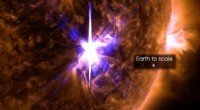
* Solar Activity: X-ray emissions from the Sun are highly variable, depending on solar activity levels. During solar flares, X-ray intensity can dramatically increase.
* Spectral Range: Solar X-rays cover a wide range of energies. Different detectors are optimized for specific energy ranges.
Why Study Solar X-rays?
* Understanding Solar Flares and Coronal Mass Ejections (CMEs): X-rays provide valuable information about these energetic events and their impact on Earth.
* Studying the Sun's Corona: The hot outer atmosphere of the Sun, the corona, emits significant X-rays, allowing us to learn about its structure, temperature, and composition.
* Space Weather: Understanding solar X-ray emissions is crucial for space weather prediction, as they can affect satellites and communication systems.
In summary: Detecting X-rays from the Sun requires specialized instrumentation and often involves space-based telescopes to overcome the limitations of Earth's atmosphere. These observations provide crucial information about the Sun's activity, the structure of its corona, and potential impacts on Earth.