* Spiral galaxies: Both galaxies are classified as spiral galaxies, characterized by a central bulge, spiral arms, and a disk of stars and gas.
* Massive: Both galaxies are massive, containing billions of stars and a significant amount of dark matter.
* Composed of similar materials: Both galaxies are primarily composed of stars, gas, dust, and dark matter.
* Home to star formation: Both galaxies are actively forming new stars, with regions of intense star formation in their spiral arms.
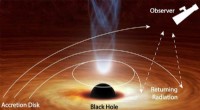
* Contain black holes: Both galaxies harbor supermassive black holes at their centers.
* Orbiting satellites: Both galaxies have smaller galaxies orbiting them, known as satellite galaxies.
However, there are also some key differences:
* Size: Andromeda is slightly larger than the Milky Way, with a diameter of about 220,000 light-years compared to the Milky Way's 100,000 light-years.
* Mass: Andromeda is more massive than the Milky Way, containing approximately 1 trillion stars compared to the Milky Way's 200-400 billion stars.
* Luminosity: Andromeda is brighter than the Milky Way, emitting more light.
* Gas content: Andromeda has a higher proportion of gas than the Milky Way, which contributes to its higher star formation rate.
* Star formation rate: Andromeda forms stars at a faster rate than the Milky Way.
Despite these differences, both Andromeda and the Milky Way are fascinating examples of the vastness and complexity of the universe. They are also destined to collide in about 4 billion years, resulting in a giant elliptical galaxy.