Here's a breakdown of the key features and characteristics of elliptical orbits:
Shape:
* Ellipse: The shape of the orbit is an ellipse, with two focal points.
* Eccentricity: This value determines how much the ellipse deviates from a perfect circle. An eccentricity of 0 represents a perfect circle, while higher values indicate more elongated ellipses.
Motion:
* Variable Speed: The orbiting object doesn't move at a constant speed. It moves faster when it's closer to the central object (perihelion) and slower when it's farther away (aphelion).
* Focus: The central object around which the object orbits is located at one of the focal points of the ellipse.
Key Concepts:
* Perihelion: The point in the orbit where the orbiting object is closest to the central object.
* Aphelion: The point in the orbit where the orbiting object is farthest from the central object.
* Semi-major axis: Half the longest diameter of the ellipse, which determines the average distance between the orbiting object and the central object.
* Semi-minor axis: Half the shortest diameter of the ellipse.
Examples:
* Planets orbiting the Sun: Most planets in our solar system have elliptical orbits around the Sun.
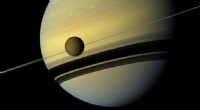
* Moons orbiting planets: Moons typically follow elliptical orbits around their host planets.
* Artificial satellites: Many artificial satellites orbiting Earth follow elliptical paths.
Significance:
Elliptical orbits are fundamental to understanding the motion of celestial bodies. They are governed by Newton's laws of gravitation and motion. The shape and characteristics of an elliptical orbit can tell us a lot about the gravitational interaction between the two objects.
Important Note: While we talk about elliptical orbits, most orbits are not perfectly elliptical. They are affected by the gravitational pull of other objects, and the presence of other forces, leading to slight deviations from the pure elliptical shape.