Here are some notable examples:
* The International Space Station (ISS): This is the largest and most complex scientific laboratory ever built in space. It provides a unique environment for conducting research in biology, physics, astronomy, and other fields.
* The Hubble Space Telescope (HST): While primarily an observatory, the Hubble telescope has been a cornerstone of astronomical research for decades, allowing scientists to observe distant galaxies and celestial objects with unprecedented clarity.
* Various Earth Observation Satellites: Many satellites are dedicated to studying Earth's environment, climate, and natural resources. Examples include Landsat, Sentinel, and GOES.
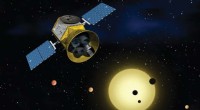
* Space Telescopes: Beyond the Hubble, there are other space telescopes like the James Webb Space Telescope (JWST) and the Chandra X-ray Observatory, which are designed to observe the universe in different wavelengths of light.
* Dedicated Scientific Missions: Numerous spacecraft are launched with specific scientific objectives, like studying Mars, Jupiter, or the Sun. These missions often carry instruments and technologies tailored for their particular research goals.
Therefore, it's more accurate to say that many scientific laboratories orbit Earth, each with its unique purpose and capabilities.