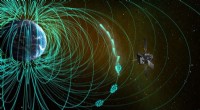
1. Gravity: The Earth's gravity pulls the satellite towards its center, like an invisible string.
2. Inertia: Satellites are launched with a great deal of horizontal velocity (speed in a sideways direction). This velocity keeps the satellite from falling directly to Earth.
The balance:
* Imagine a cannonball fired horizontally. The cannonball travels a short distance before falling to the ground.
* Now imagine firing the cannonball faster. It travels further before hitting the ground.
* If you could fire the cannonball fast enough, it would travel so far that the Earth's curvature would curve away from the path of the cannonball *at the same rate* that the cannonball is falling towards Earth.
* This creates a circular orbit.
Types of Orbits:
Satellites can orbit at different heights and speeds, leading to various types of orbits:
* Low Earth Orbit (LEO): Close to Earth's surface (160-2,000 km), used for Earth observation, communications, and some space stations.
* Medium Earth Orbit (MEO): Between LEO and GEO (2,000-35,786 km), used for navigation systems like GPS.
* Geostationary Earth Orbit (GEO): At a specific altitude (35,786 km), the satellite orbits at the same speed as Earth's rotation. It appears stationary from Earth, ideal for communication and weather satellites.
Other factors:
* Atmospheric drag: Earth's atmosphere exerts a small amount of drag on satellites, especially in LEO. This slows the satellite down, eventually causing it to re-enter the atmosphere.
* Orbital decay: The drag can cause the satellite to lose altitude gradually.
* Orbital maneuvers: Satellites can use thrusters to adjust their orbits, moving higher, lower, or changing their inclination (angle).
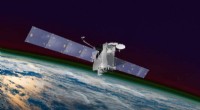
In short, satellites orbit the Earth because they are constantly falling towards it, but their horizontal velocity keeps them from hitting the ground.