1. Keeping Earth in Orbit:
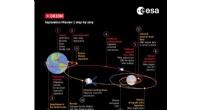
* Centripetal Force: The Sun's gravity acts as a centripetal force, constantly pulling Earth towards it. This force is balanced by Earth's tangential velocity, causing it to move in a nearly circular orbit around the Sun. Without the Sun's gravity, Earth would fly off into space on a tangent.
2. Seasons:
* Earth's Tilt: Earth is tilted on its axis, and this tilt combined with our orbit around the Sun causes the seasons. As Earth orbits the Sun, different hemispheres are tilted towards or away from the Sun, resulting in varying amounts of sunlight and temperatures.
3. Tides:
* Moon's Gravity: While the Sun's gravity does play a role in tides, the Moon's gravitational pull is actually stronger. However, the Sun's gravity does contribute to the overall tidal force, making high tides higher and low tides lower during certain times of the month.
4. Solar System Stability:
* Gravitational Influence on Other Planets: The Sun's gravity also influences the orbits of other planets in our solar system, helping maintain the stability of the entire system.
5. Solar Flares and Coronal Mass Ejections (CMEs):
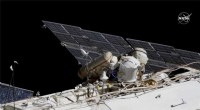
* Space Weather: While not directly related to gravity, solar flares and CMEs can impact Earth's atmosphere and magnetic field, causing disturbances that can disrupt communication systems, power grids, and even pose risks to astronauts.
In summary: The Sun's gravity is essential for life on Earth, keeping us in a stable orbit and providing the energy that fuels our planet. It's a fundamental force that governs our place in the solar system.