1. Dust Grains and Gravity:
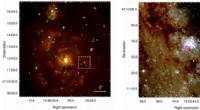
* Nebulae: A nebula is a vast cloud of gas and dust, primarily hydrogen and helium, with trace amounts of heavier elements.
* Dust Grains: Within these nebulae, tiny dust grains, typically just micrometers in size, are scattered. These grains are composed of materials like silicates, carbon, ice, and other compounds.
* Gravity: Over time, the cloud begins to collapse under its own gravity. This collapse is triggered by events like supernovae, which create shockwaves that compress the nebula.
2. Accretion and Growth:
* Collisions: As the nebula collapses, the dust grains collide with each other more frequently. The collapse also causes the nebula to spin faster.
* Electrostatic Forces: Dust grains can also attract each other through electrostatic forces, further promoting clumping.
* Sticky Surfaces: Some dust grains, like those containing ice, have sticky surfaces that help them adhere to each other.
* Larger Clumps: Through these collisions, larger clumps of dust begin to form. These clumps are still relatively small, but they mark the beginning of planetesimal formation.
3. Gravitational Attraction:
* Increased Mass: As the clumps grow, they exert a stronger gravitational pull.
* Accretion: This increased gravity attracts more dust and small particles, causing the clumps to grow even larger.
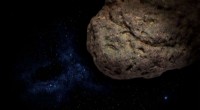
* Planetesimals: Eventually, these clumps grow to sizes of kilometers or even hundreds of kilometers, becoming planetesimals, the building blocks of planets.
4. Continued Growth and Differentiation:
* Planetesimal Collisions: Planetesimals continue to collide with each other, sometimes merging and sometimes breaking apart.
* Differentiation: Over time, planetesimals heat up due to collisions and radioactive decay. This heat allows heavier elements to sink towards the center, forming a core, while lighter elements rise to the surface.
Important Considerations:
* Turbulence: Turbulence within the nebula can disrupt the accretion process, sometimes scattering dust grains instead of bringing them together.
* Planetary Disk: As the planetesimals form, they begin to orbit the central star in a flattened disk, creating the protoplanetary disk.
* Formation of Planets: The planetesimals in the disk continue to collide and accrete, eventually forming the planets we see in our solar system.
The process of planetesimal formation is complex and involves a delicate balance of forces. However, the interplay of gravity, collisions, and electrostatic forces is essential for converting dust particles into the building blocks of planets.