1. Astrometry:
* This is the science of precisely measuring the positions and motions of celestial objects.
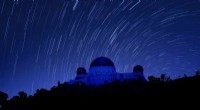
* Astronomers use telescopes equipped with specialized cameras to capture images of the stars and measure their positions over time.
* By comparing these measurements, astronomers can determine the stars' proper motion (their movement across the sky) and radial velocity (their movement towards or away from us).
2. Spectroscopy:
* This technique analyzes the light emitted by stars.
* Every element in a star emits or absorbs light at specific wavelengths.
* By examining the spectrum of a star's light, astronomers can determine its composition, temperature, and radial velocity.
* The Doppler shift, a change in the wavelengths of light due to the star's motion, reveals its radial velocity.
3. Stellar Parallax:
* This method uses the Earth's motion around the Sun to measure the distance to nearby stars.
* As the Earth orbits the Sun, a nearby star appears to shift its position against the background of more distant stars.
* By measuring this apparent shift (parallax), astronomers can calculate the star's distance.
* Once the distance is known, the star's proper motion can be used to calculate its tangential velocity (its movement perpendicular to our line of sight).
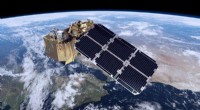
4. Space Telescopes:
* Telescopes in space, like the Hubble Space Telescope, offer a clearer view of the universe without the distortions caused by Earth's atmosphere.
* They allow astronomers to observe stars in greater detail and make more precise measurements of their positions and motions.
5. Computer Simulations:
* Astronomers use computer simulations to model the evolution of stars and galaxies.
* These simulations help them understand the forces that drive stellar motion and predict future movements.
6. Observing Binary Star Systems:
* Binary stars orbit each other, and by observing their orbits, astronomers can calculate their masses and velocities.
* This information can be used to understand the dynamics of stellar systems and the forces that influence their motions.
By combining these techniques, astronomers are able to piece together a comprehensive understanding of how stars move in the night sky, providing valuable insights into the evolution of the universe and the formation of stars and galaxies.