1. Eliminating Atmospheric Distortion:
* Earth's atmosphere acts like a blurry lens, scattering and absorbing light. This significantly reduces the clarity of ground-based telescopes.
* By being above the atmosphere, Hubble can capture incredibly sharp and detailed images of celestial objects.
2. Continuous Observation:
* Earth's rotation means ground-based telescopes can only observe a limited portion of the sky at any given time.
* Hubble's orbit allows it to continuously observe the universe, making it an incredibly powerful tool for long-term studies.
3. Access to Ultraviolet and Infrared Light:
* Our atmosphere blocks most ultraviolet and infrared radiation.
* Hubble, being in space, can observe these wavelengths, expanding our understanding of the universe.
4. Stable Platform:
* Hubble's orbit is relatively stable, allowing for precise pointing and long exposures.
* This is crucial for capturing faint objects and fine details.
5. Accessibility for Servicing:
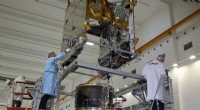
* Although Hubble is in orbit, its location is relatively close to Earth, making it possible to send space shuttle missions to repair and upgrade the telescope.
* This has extended its lifespan and allowed for advancements in its capabilities.
In summary, Hubble's orbit provides a vantage point free from atmospheric distortion, offering continuous observation, access to a wider range of wavelengths, and a stable platform for precise measurements. These advantages make it a revolutionary tool for astronomical research.