Low-Mass Stars (less than 8 solar masses):
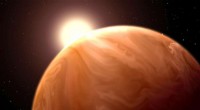
* Red Giant Phase: As the star's hydrogen fuel runs out, its core contracts, heating up and causing the outer layers to expand and cool, transforming it into a red giant.
* Helium Fusion: The core gets hot enough to fuse helium into carbon and oxygen.
* Planetary Nebula: After helium fusion stops, the outer layers are expelled into space, creating a beautiful planetary nebula.
* White Dwarf: The remaining core, mostly carbon and oxygen, cools and shrinks into a dense, hot white dwarf, eventually fading into a black dwarf over billions of years.
Intermediate-Mass Stars (8-25 solar masses):
* Supergiant Phase: These stars go through similar phases as low-mass stars, but become even larger and brighter, known as red supergiants.
* Multiple Fusion: They fuse heavier elements like carbon, oxygen, neon, silicon, and finally iron in their cores.
* Supernova Explosion: Once iron is formed, fusion stops because it requires energy instead of releasing it. This leads to a catastrophic collapse, creating a powerful supernova explosion that scatters heavy elements into space.
* Neutron Star: The core of the supernova remnant collapses into a dense, rapidly spinning neutron star, about 20 km in diameter.
Massive Stars (greater than 25 solar masses):
* Supergiant Phase: These stars become even larger and brighter than intermediate-mass stars, known as blue supergiants.
* Multiple Fusion: They go through similar fusion stages as intermediate-mass stars, forming heavier elements up to iron.
* Supernova Explosion: Their cores collapse, triggering a hypernova, a much more powerful supernova than those from intermediate-mass stars.
* Black Hole: The core of the hypernova remnant collapses into a singularity, forming a black hole with immense gravity that pulls everything in its vicinity.
Other Factors:
While mass is the primary factor, other factors can influence a star's death sequence, including:
* Rotation: Stars with higher rotation rates may have different death sequences.
* Binary Systems: Stars in binary systems can interact and influence each other's evolution.
* Metallicity: The abundance of heavier elements in a star can affect its evolution and death.
In summary, a star's death sequence is a fascinating journey determined by its initial mass, with each stage leading to the creation of unique celestial objects that enrich the universe.