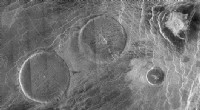
1. Radio Waves: Longest wavelength, used to study cold objects like interstellar gas and dust, as well as distant galaxies.
2. Microwaves: Slightly shorter wavelength, used to study the Cosmic Microwave Background (CMB) radiation, a remnant of the Big Bang.
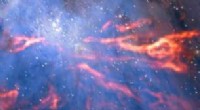
3. Infrared Radiation: Emitted by warm objects, useful for studying star formation, planets, and dust.
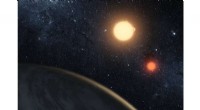
4. Visible Light: What we see with our eyes, allows us to study the surfaces of stars, planets, and galaxies.
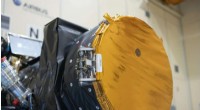
5. Ultraviolet Radiation: Emitted by hot objects like stars, used to study stellar atmospheres and interstellar gas.
6. X-rays: Emitted by extremely hot objects like black holes and neutron stars, revealing energetic processes in the universe.
7. Gamma Rays: Highest energy radiation, emitted by the most violent events like supernova explosions and active galactic nuclei.
These are the main types of electromagnetic radiation, but astronomers also study other phenomena like cosmic rays and neutrinos, which are not part of the electromagnetic spectrum.