Size:
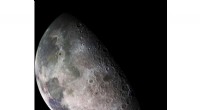
* Perspective: While the moon is large, it's much smaller than the sun. The reason it appears big is due to its relative proximity to Earth compared to the sun.
* Optical Illusion: Our brains tend to perceive objects near the horizon as larger than objects high in the sky, even if they are the same size. This is why the moon looks bigger when it's rising or setting.
Color:
* Scattering of Light: The Earth's atmosphere scatters sunlight. Blue light scatters more than red light, which is why the sky appears blue during the day. As the sun sets (or rises), the sunlight has to travel through more atmosphere, scattering even more blue light. This leaves the longer wavelength, red-orange light, to reach our eyes, giving the moon a yellow hue.
* Atmospheric Conditions: The amount of dust and moisture in the atmosphere also affects the color of the moon. More dust and moisture can cause the moon to appear reddish or orange.
Other Factors:
* Illusions: The moon often appears bigger when it's near other objects on the horizon, like trees or buildings, which makes it seem even larger by comparison.
* Time of Year: The moon's apparent size can slightly vary depending on its position in its orbit around the Earth, but this is not a major factor in its overall size.
In summary: The moon's apparent size is a combination of its true size and our perspective, while its yellow color is due to the scattering of light by the Earth's atmosphere.