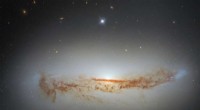
* Unprecedented Views of the Universe: Hubble has provided breathtaking images of nebulae, galaxies, and other celestial objects, revealing the beauty and grandeur of the cosmos in unprecedented detail. These images have inspired generations and sparked public interest in astronomy.
* Breakthrough Scientific Discoveries: Hubble's observations have led to groundbreaking discoveries, including:
* Determining the age of the Universe: Hubble's measurements of distant supernovae helped refine our understanding of the Universe's expansion rate, leading to a more accurate estimate of its age.
* Confirming the existence of Dark Energy: Hubble's observations revealed that the Universe's expansion is accelerating, hinting at the presence of an unknown force called Dark Energy.
* Mapping the distribution of Dark Matter: Hubble's observations of galaxy clusters helped map the distribution of Dark Matter, an unseen substance that makes up a large part of the Universe.
* Studying the evolution of galaxies: Hubble has provided valuable insights into the formation and evolution of galaxies, revealing their diverse shapes and sizes.
* Technological Advancements: The development and operation of Hubble have driven numerous technological advancements, including improved imaging sensors, space-based telescopes, and data processing techniques.
* Inspiration and Education: Hubble's images and discoveries have inspired countless people, from scientists to the general public, fostering a deeper appreciation for science and the Universe. It has played a significant role in education and outreach programs, sparking curiosity and encouraging new generations to pursue careers in STEM fields.
* Costly Maintenance and Upgrades: Maintaining and upgrading Hubble in space requires complex and expensive missions, putting a strain on NASA's budget.
* Limited Lifetime: Hubble's lifespan is finite, and its eventual retirement will leave a void in astronomical research.
* Bias Towards Visible Light: While Hubble is a powerful tool, its primary focus is on visible light, limiting its ability to study objects that emit predominantly in other wavelengths, such as infrared or X-rays.
* Not a Replacement for Ground-Based Telescopes: Hubble is not a replacement for ground-based telescopes, which offer complementary advantages in terms of size, stability, and accessibility.
* Potential for Contamination: Hubble's instruments could be affected by contamination from space debris or other factors, potentially impacting its performance.
Overall, the positive effects of Hubble Space Telescope far outweigh its negative effects. It remains one of the most significant scientific instruments ever built, revolutionizing our understanding of the Universe and inspiring countless people. However, it is crucial to acknowledge its limitations and develop new space telescopes to further explore the cosmos.