Size and Composition:
* Jupiter: A gas giant, the largest planet in our solar system. It's more than 11 times wider than Earth and over 300 times more massive. It's primarily composed of hydrogen and helium, with a small rocky core.
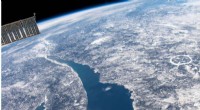
* Earth: A rocky planet, much smaller than Jupiter. It has a solid surface, liquid water, and a diverse atmosphere.
Atmosphere:
* Jupiter: A thick, swirling atmosphere composed mostly of hydrogen and helium. It features prominent bands, storms, and the Great Red Spot, a giant anticyclonic storm.
* Earth: Has a thinner atmosphere, primarily nitrogen and oxygen. It experiences weather patterns like rain, snow, and wind, influenced by its rotation, oceans, and solar energy.
Temperature:
* Jupiter: Extremely cold, with average temperatures in the upper atmosphere around -145°C (-234°F). It receives much less solar energy than Earth due to its distance from the Sun.
* Earth: A habitable planet with an average temperature of about 15°C (59°F). The temperature range varies across the globe due to latitude, seasons, and altitude.
Gravity:
* Jupiter: Has a much stronger gravitational pull than Earth, about 2.5 times greater. This means you'd weigh significantly more on Jupiter.
* Earth: Our familiar gravity, which keeps us grounded and shapes the planet's surface and atmosphere.
Moons:
* Jupiter: Has 79 confirmed moons, each with its own unique characteristics and potential for harboring life.
* Earth: Has only one moon, which plays a crucial role in stabilizing Earth's rotation and creating tides.
Life:
* Jupiter: No evidence of life has been found on Jupiter due to its extreme conditions.
* Earth: The only planet known to harbor life, with a diverse ecosystem ranging from microscopic organisms to complex animal species.
Key differences:
* Composition: Jupiter is a gas giant, while Earth is a rocky planet.
* Size and mass: Jupiter is significantly larger and more massive than Earth.
* Temperature: Jupiter is extremely cold, while Earth has a habitable temperature range.
* Gravity: Jupiter has a much stronger gravitational pull than Earth.
* Moons: Jupiter has dozens of moons, while Earth has only one.
* Life: Earth is the only known planet with life, while Jupiter is not considered habitable.
In conclusion, Jupiter and Earth are vastly different planets with contrasting characteristics. While they share similarities like being part of our solar system, their distinct features make them fundamentally different worlds.