1. Telescopes and Sensors:
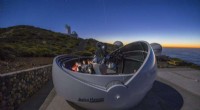
* Optical Telescopes: These use lenses and mirrors to collect visible light, allowing the probe to study the colors, brightness, and shapes of celestial objects.
* Infrared Telescopes: These detect infrared radiation, which can reveal the temperature, composition, and motion of objects.
* Ultraviolet Telescopes: These detect ultraviolet light, which can provide information about the atmospheres of planets and stars.
* X-ray Telescopes: These are used to study high-energy processes in space, such as black holes and supernovae.
* Gamma-ray Telescopes: These detect the highest-energy photons, providing insights into cosmic ray sources and other violent events.
* Radio Telescopes: These listen for radio waves emitted from space, revealing the composition and structure of objects like galaxies and nebulae.
* Magnetometers: These measure magnetic fields, which can reveal the presence of planets with magnetic fields, solar flares, and other magnetic activity.
* Particle Detectors: These instruments measure the composition and energy of particles in space, such as cosmic rays and solar wind.
2. Landers and Rovers:
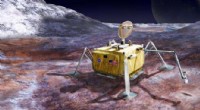
* Landers: These spacecraft land on the surface of planets or moons, deploying instruments to study the composition, atmosphere, and geology of the landing site.
* Rovers: These are mobile landers equipped with cameras, sensors, and tools to explore a wider area and collect data.
3. Orbiters:
* Orbiters: These spacecraft circle around planets or moons, taking measurements and pictures of the surface and atmosphere.
4. Sample Return Missions:
* Sample Return Missions: These spacecraft collect samples of material from other planets or moons and bring them back to Earth for analysis.
5. Data Transmission:
* Data Transmission: Once the probe has gathered information, it is transmitted back to Earth through radio signals. These signals can be sent directly to Earth or relayed through other spacecraft or satellites in space.
6. Data Processing and Analysis:
* Data Processing and Analysis: Scientists on Earth process and analyze the data received from space probes, using sophisticated computer programs and analytical techniques.
By combining these different methods, space probes have helped us to understand the universe in ways that were unimaginable just a few decades ago. They have revealed the composition of planets, the nature of stars, the origin of galaxies, and the mysteries of black holes, among many other things.