1. Phases of Venus: Galileo Galilei's observations of Venus through his telescope revealed that it goes through phases, much like our Moon. This could only be explained if Venus orbits the Sun, and not the Earth. If Venus were orbiting Earth, we would always see the same face of it.
2. Parallax: The apparent shift in the position of a star when viewed from different locations on Earth is called parallax. This phenomenon was predicted by ancient Greek astronomers, but they could not measure it because it was too small. In the 19th century, astronomers finally measured stellar parallax, confirming that Earth orbits the Sun and is not stationary.
3. Kepler's Laws of Planetary Motion: Johannes Kepler, after studying the meticulous observations of Tycho Brahe, formulated three laws describing the motion of planets:
* Law of Ellipses: Planets orbit the Sun in elliptical paths, not perfect circles.
* Law of Areas: A line connecting a planet to the Sun sweeps out equal areas in equal times.
* Law of Periods: The square of a planet's orbital period is proportional to the cube of its average distance from the Sun. These laws were only consistent with a Sun-centered solar system.
4. Aberration of Starlight: James Bradley, in the 18th century, observed that the apparent position of stars changes slightly over the year due to the Earth's motion. This phenomenon, known as aberration of starlight, is another proof of Earth's orbital motion around the Sun.
5. Doppler Shift: The light from stars moving towards us appears slightly bluer, while light from stars moving away from us appears slightly redder (this is called the Doppler effect). Astronomers use this to measure the radial velocity of stars, which can be used to confirm the orbital motion of planets around stars.
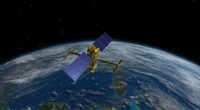
6. Direct Observation: Modern telescopes and space probes, like the Hubble Space Telescope and the Kepler Space Telescope, have allowed us to directly observe planets orbiting other stars, providing further evidence for a heliocentric model.
These observations and discoveries, along with numerous other pieces of evidence, have helped scientists establish the heliocentric model of the solar system as the most accurate and widely accepted theory of our place in the universe.