Here's a breakdown:
* Shape: Due to their large mass and rapid rotation, gas giants are oblate spheroids, meaning they are slightly flattened at the poles and bulging at the equator. Think of a squashed sphere.
* Composition: They lack a solid surface and have a thick atmosphere with layers of clouds.
* Internal Structure: They have a small, rocky core surrounded by layers of liquid hydrogen, metallic hydrogen, and a gaseous outer layer.
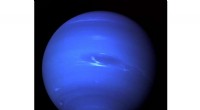
Examples of outer planets and their shapes:
* Jupiter: The most oblate planet in the solar system. Its equatorial diameter is about 9% larger than its polar diameter.
* Saturn: Slightly less oblate than Jupiter.
* Uranus: It has a more extreme oblateness compared to Jupiter and Saturn, due to its faster rotation.
* Neptune: Similar oblateness to Uranus.
It's important to note that the shape of these planets is not perfectly uniform, and they have subtle variations due to internal processes and atmospheric activity.