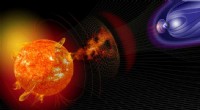
* Stars emit a spectrum of radiation: Stars emit light across the entire electromagnetic spectrum, including visible light, ultraviolet, infrared, and even X-rays. There's no single "radiation level" that encompasses all this.
* Blue stars are hotter: Blue stars are much hotter than our Sun. This means they emit a lot more energy and a larger proportion of their radiation is in the ultraviolet range.
* Brightness and radiation vary: The amount of radiation a star emits depends on its size, temperature, and age. A larger, hotter, and younger blue star will be much more luminous and emit much more radiation than a smaller, cooler, and older blue star.
Instead of "radiation level," we talk about these things:
* Luminosity: The total amount of energy a star emits per second. Blue stars are generally very luminous.
* Spectral type: This classifies stars based on their surface temperature, with blue stars being classified as O and B types.
* Ultraviolet flux: This measures the amount of ultraviolet radiation a star emits, which is higher for hotter stars like blue stars.
In short, blue stars emit a lot of radiation, particularly in the ultraviolet range. However, it's important to be specific about the type of radiation and how it's measured rather than talking about a general "radiation level."