Shape:
* Planets: Have nearly circular orbits around the Sun, meaning they follow a path close to a perfect circle.
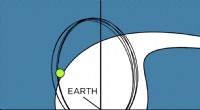
* Comets: Have highly elliptical orbits, meaning their paths are elongated and stretched out. This means they spend most of their time far away from the Sun and only come close to it for a brief period.
Orbital Period:
* Planets: Have relatively short orbital periods, ranging from Earth's 365 days to Neptune's 165 years.
* Comets: Have much longer orbital periods, ranging from a few years to millions of years. Some comets take thousands of years to complete a single orbit around the Sun.
Plane of Orbit:
* Planets: All orbit the Sun in roughly the same plane, called the ecliptic. This is why we see planets clustered within a relatively narrow band in the night sky.
* Comets: Can have orbits inclined at all sorts of angles to the ecliptic. This means they can appear anywhere in the sky, not just near the ecliptic plane.
Composition:
* Planets: Composed primarily of rock and gas, with solid surfaces and atmospheres.
* Comets: Mostly made of ice and dust. When a comet comes close to the Sun, the ice sublimates (turns directly into gas) and forms a glowing tail.
Origin:
* Planets: Formed from the disk of gas and dust that surrounded the early Sun.
* Comets: Believed to have formed in the outer reaches of the solar system, beyond the orbit of Neptune, in a region known as the Kuiper Belt or the Oort Cloud.
Impact on Earth:
* Planets: Do not pose a direct threat to Earth, as they are in stable orbits.
* Comets: Can pose a threat to Earth if their orbits intersect with Earth's orbit. This has happened in the past and can result in catastrophic events.
Here's a simple analogy: Imagine a child running in circles around a playground. That's a planet's orbit. Now imagine a butterfly flying in a much larger circle, sometimes coming close to the child and then flying off again. That's a comet's orbit.