1. Galileo's Observations:
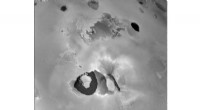
* In the early 17th century, Galileo Galilei used his newly invented telescope to observe the four largest moons of Jupiter (Io, Europa, Ganymede, and Callisto). He meticulously tracked their movements, noting how they orbited Jupiter.
* These observations showed that not everything revolved around the Earth. The moons of Jupiter clearly orbited their own planet, challenging the geocentric model's assertion that Earth was the center of everything.
2. The Implications of Jupiter's Moons:
* The discovery of Jupiter's moons suggested a heliocentric model where planets orbited the sun. If Earth wasn't the center, the moons of Jupiter also couldn't be orbiting Earth.
* The existence of these moons directly contradicted the idea that everything had to revolve around Earth, as the geocentric model proposed.
3. Challenges to the Geocentric Model:
* Galileo's observations provided strong evidence against the geocentric model. He argued that the existence of these moons supported the heliocentric model, where planets orbit the sun.
* However, his findings faced significant opposition from the Church and those who supported the geocentric model. The idea of Earth being just another planet in a solar system challenged the prevailing religious and philosophical views.
4. The Shift in Understanding:
* While Galileo's discoveries were initially met with resistance, his observations helped to lay the foundation for the acceptance of the heliocentric model.
* The discovery of Jupiter's moons was a major step in the scientific revolution, demonstrating that the universe was far more complex and vast than previously understood.
In conclusion, the observation of moons, specifically Jupiter's moons, provided crucial evidence against the geocentric model. They showed that not everything revolved around Earth and supported the idea of a heliocentric solar system. This discovery marked a turning point in our understanding of the universe and paved the way for modern astronomy.