* Newton's Law of Universal Gravitation: This law states that every particle in the Universe attracts every other particle with a force that is proportional to the product of their masses and inversely proportional to the square of the distance between their centers.
* Mass and Gravity: The more massive an object is, the stronger its gravitational pull.
* Attraction and Binding: This gravitational attraction between celestial bodies pulls them towards each other. If the attraction is strong enough, it overcomes the objects' initial motion and binds them together.
* Orbital Motion: The balance between the inward pull of gravity and the outward motion of a celestial body (like a planet around a star) creates a stable orbit.
Examples:
* Stars and Planets: The Sun's massive gravity holds all the planets in our solar system in their orbits.
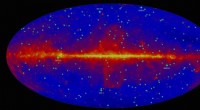
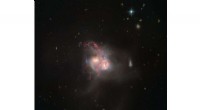
* Galaxies: Galaxies are held together by the combined gravity of all the stars, gas, dust, and dark matter within them.
* Binary Star Systems: Two stars can orbit each other due to their mutual gravitational attraction.
* Black Holes: Black holes have such intense gravity that they can pull in and trap even light.
Key Points:
* Gravity is the weakest of the four fundamental forces, but it's the only force that acts over large distances and has a significant influence on the structure of the Universe.
* The strength of gravity is determined by the mass of the objects involved and the distance between them.
* Gravitational binding is responsible for the formation and evolution of stars, planets, galaxies, and even the Universe itself.
Let me know if you have any other questions about gravity or celestial bodies!