1. Stellar Evolution:
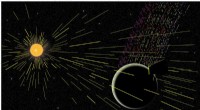
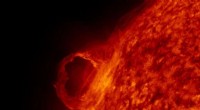
* Red Giant Stars: As stars age, they become red giants. During this phase, they lose mass in the form of stellar wind, which carries dust grains. These grains are primarily composed of carbon, silicon, and oxygen.
* Supernovae: These powerful explosions, marking the end of massive stars, eject vast amounts of dust into space. This dust is richer in heavier elements like iron, nickel, and sulfur.
* AGB Stars: Asymptotic Giant Branch (AGB) stars are stars in their final evolutionary stages, similar to red giants. They produce a significant amount of dust through mass loss, contributing to the overall cosmic dust population.
2. Collisions and Destruction:
* Planetary Collisions: Early in the formation of planetary systems, collisions between planetesimals (small bodies that coalesce to form planets) produce dust.
* Cometary Activity: When comets approach the sun, they release gas and dust, contributing to the interplanetary dust cloud.
* Asteroid Impacts: Collisions between asteroids can also release dust into space.
3. Other Sources:
* Interstellar Medium (ISM): Dust can be created through collisions between gas molecules within the ISM.
* Supernova Remnants: The shock waves from supernovae can also trigger dust formation in the surrounding gas.
* Active Galactic Nuclei (AGN): These powerful sources of energy can expel dust into the interstellar medium.
Composition of Cosmic Dust:
Cosmic dust is primarily composed of silicates, carbon, ice, and metals. The exact composition varies depending on the source and age of the dust.
Importance of Cosmic Dust:
* Star Formation: Dust plays a crucial role in the formation of new stars by providing the seeds around which gas can condense.
* Planet Formation: Dust particles clump together to form larger bodies, eventually leading to the formation of planets.
* Interstellar Extinction: Dust absorbs and scatters starlight, making distant objects appear fainter.
Understanding the origin and evolution of cosmic dust is crucial for comprehending the processes that shape galaxies and planetary systems.