The Sun, like all stars, has a life cycle that can be divided into several stages:
1. Nebula: The Sun's journey begins within a vast cloud of gas and dust called a nebula. This cloud is primarily composed of hydrogen and helium.
2. Protostar: Under the influence of gravity, the nebula collapses, causing its core to heat up. As the core gets hotter, it becomes a protostar, a dense, hot, and luminous object.
3. Main Sequence Star: The protostar eventually reaches a stable state, where nuclear fusion begins in its core. This fusion process, where hydrogen atoms fuse to form helium, releases tremendous energy, resulting in the star entering its main sequence phase. This is the longest and most stable stage of a star's life, and the Sun is currently in this phase.
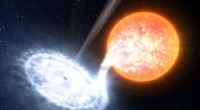
4. Red Giant: As the Sun ages, it starts to run out of hydrogen fuel. The core contracts, while the outer layers expand and cool, turning the Sun into a red giant. At this stage, the Sun's surface temperature will decrease, but it will become much larger and brighter.
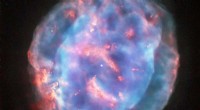
5. Planetary Nebula: Eventually, the Sun's core becomes unstable and collapses. This collapse triggers a powerful burst of energy that throws off the Sun's outer layers, creating a planetary nebula. This glowing cloud of gas and dust expands outwards, illuminating the surrounding space.
6. White Dwarf: The remaining core of the Sun, now consisting mainly of carbon and oxygen, is left behind as a white dwarf. This dense, hot, and small object slowly cools and fades over billions of years.
Important Notes:
* The Sun is a medium-sized star with a lifespan of about 10 billion years. It is currently about halfway through its main sequence phase.
* Stars with different masses have different life cycles. More massive stars burn hotter and faster, leading to shorter lifespans.
* The Sun's eventual death as a white dwarf is a peaceful process, not a violent explosion like a supernova.
Beyond the White Dwarf: There are further stages for stars like the Sun, but they occur over incredibly long timescales. Eventually, the white dwarf could cool and become a black dwarf, a cold and faint object. However, this process takes so long that no black dwarfs are expected to exist yet.