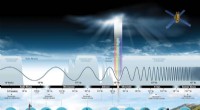
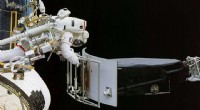
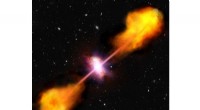
* Telescopes: These instruments collect light from distant objects, allowing us to study their composition, temperature, movement, and other properties. Telescopes can be on Earth or in space, and they observe in different wavelengths of light, including visible, infrared, ultraviolet, and radio waves.
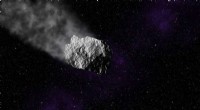
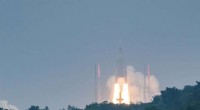
* Spacecraft: By sending probes and rovers into space, scientists can directly study planets, moons, asteroids, and other celestial objects. These missions collect data on surface features, atmospheres, magnetic fields, and even collect samples for analysis.
* Experiments: Scientists also perform experiments in space, such as studying how plants grow in microgravity or testing new technologies. These experiments provide valuable data about the effects of space on different phenomena.
In addition to observation, scientists also use:
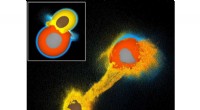
* Computer simulations: These models help us understand complex processes like star formation, galaxy evolution, and the early universe.
* Mathematical analysis: Scientists use equations and statistical methods to interpret observations and make predictions.
While observation is the primary way scientists gain information about space, it is constantly being refined and enhanced by the use of new technologies and innovative approaches.