1. Planetary and Celestial Data:
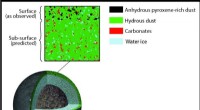
* Composition and Structure: Studying the chemical makeup of planets, moons, asteroids, and comets through spectroscopic analysis of their atmospheres and surfaces.
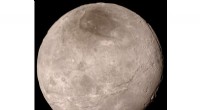
* Geology and Topography: Mapping the surface features, including mountains, valleys, craters, and other landforms.
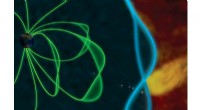
* Magnetic Fields: Measuring the strength and direction of magnetic fields, which can reveal information about the planet's core and its interaction with the solar wind.
* Atmosphere: Analyzing the composition, pressure, temperature, and weather patterns of planetary atmospheres.
* Gravity and Mass: Determining the gravitational pull of celestial bodies, which helps us understand their mass and density.
2. Solar System Data:
* Solar Wind: Studying the flow of charged particles from the Sun and how they interact with planets and other objects.
* Interplanetary Dust: Investigating the distribution and composition of dust particles in the solar system.
* Cosmic Rays: Measuring the high-energy particles that bombard the solar system from outside.
3. Beyond the Solar System:
* Exoplanets: Detecting and characterizing planets orbiting other stars, providing clues about the formation and diversity of planetary systems.
* Interstellar Medium: Studying the composition and properties of the gas and dust between stars.
* Background Radiation: Mapping the cosmic microwave background radiation, which is a relic of the Big Bang.
4. Data Collection Methods:
* Imaging: Taking pictures of planets, moons, and other objects in the solar system and beyond.
* Spectroscopy: Analyzing the light emitted or reflected by celestial bodies to determine their composition and temperature.
* Magnetometry: Measuring magnetic fields.
* Gravimetry: Determining the gravitational pull of celestial bodies.
* Seismometry: Detecting seismic activity on planets and moons.
* Radar: Mapping the surface of planets and moons using radio waves.
* Atmospheric Sampling: Analyzing the composition of planetary atmospheres.
5. Types of Data Collected:
* Visual Images: Pictures of planets, moons, and other objects.
* Spectroscopic Data: Data about the composition and temperature of celestial bodies.
* Magnetic Field Data: Data about the strength and direction of magnetic fields.
* Gravity Data: Data about the gravitational pull of celestial bodies.
* Seismic Data: Data about seismic activity on planets and moons.
* Atmospheric Data: Data about the composition, pressure, temperature, and weather patterns of planetary atmospheres.
This information helps scientists understand the origins and evolution of the solar system, the formation of planets and stars, and the nature of the universe itself. The data collected by space probes is essential for advancing our knowledge of the cosmos.