1. Observational Evidence:
* Protoplanetary Disks: Telescopes have observed numerous protoplanetary disks around young stars. These disks show the presence of gas and dust, confirming the existence of the initial material required for planetary formation.
* Circumstellar Disks: The presence of debris disks around stars indicates that the process of planet formation is ongoing and leaves behind leftover material.
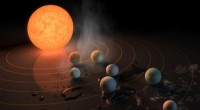
* Exoplanets: The discovery of thousands of exoplanets, with diverse compositions and orbital configurations, supports the idea that planet formation is a common occurrence in the universe.
* Planetary Alignment: The planets in our solar system orbit in the same direction and in roughly the same plane, a pattern that suggests a common origin from a rotating disk.
2. Compositional Evidence:
* Solar System Composition: The sun's composition is remarkably similar to the composition of the outer planets, which are mainly composed of hydrogen and helium. This similarity suggests a common origin from the same primordial cloud.
* Asteroid and Comet Composition: The composition of asteroids and comets, rich in volatile elements like water and carbon, is consistent with the expected composition of the outer regions of the protoplanetary disk.
3. Physical Evidence:
* Planetary Differentiation: The layered structure of Earth and other terrestrial planets, with dense metallic cores and less dense rocky mantles, supports the idea of gravitational accretion and differentiation during planet formation.
* Isotopic Signatures: The isotopic composition of planets and other celestial objects in the solar system provides insights into their formation history and common origins.
4. Theoretical Modeling:
* Computer Simulations: Complex computer simulations of the nebular hypothesis have successfully reproduced many observed features of our solar system, including planetary spacing, orbital inclinations, and the distribution of mass.
* Physical Laws: The nebular hypothesis relies on well-established physical laws like gravity, angular momentum conservation, and thermodynamics, which contribute to its credibility.
5. Evidence from Other Solar Systems:
* Exoplanet Systems: The diversity of exoplanet systems observed, with planets ranging from gas giants to super-Earths, provides additional support for the nebular hypothesis as a universal mechanism of planet formation.
Overall, the nebular hypothesis is a well-supported and accepted theory of solar system formation, backed by a substantial body of evidence from observations, composition, physical properties, theoretical modeling, and evidence from other solar systems.