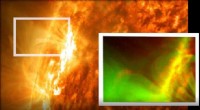
1. Captures High-Resolution Images:
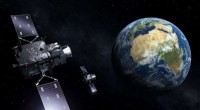
* Hubble's position above Earth's atmosphere eliminates the blurring caused by air currents, allowing it to capture incredibly sharp and detailed images of celestial objects.
2. Studies Distant Objects:
* Hubble's powerful mirrors and instruments enable it to see objects billions of light-years away, helping us understand the early universe and distant galaxies.
3. Measures Properties of Celestial Objects:
* Hubble's instruments can analyze the light from stars, galaxies, and other celestial objects to determine their composition, temperature, speed, and other important properties.
4. Investigates Planetary Systems:
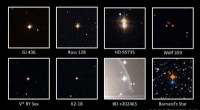
* Hubble has played a key role in discovering exoplanets and studying their atmospheres, giving us insights into the formation and evolution of planetary systems.
5. Monitors Supernovae and Other Transient Events:
* Hubble can observe the explosive death of stars (supernovae) and other transient events, offering valuable data on stellar evolution and the universe's dynamics.
6. Observes the Evolution of Galaxies:
* Hubble provides crucial observations of galaxy formation, interaction, and evolution over billions of years, helping us understand the large-scale structure of the cosmos.
7. Contributes to Fundamental Research:
* Hubble's observations have provided evidence for dark matter and dark energy, two of the most mysterious components of the universe.
In Summary:
The Hubble Space Telescope is an invaluable tool for astronomers, providing high-quality images, detailed data, and crucial insights into the universe's wonders. It continues to make significant contributions to our understanding of the cosmos.