1. Gravity:
* The dominant force: Gravity is the force that pulls the orbiting object towards the celestial body. It's the glue that keeps the object from flying off into space.
* Strength matters: The strength of gravity depends on the mass of the celestial body. More massive bodies exert a stronger gravitational pull.
* Distance matters: Gravity weakens with distance. The farther the orbiting object is, the weaker the gravitational pull.
2. Velocity (Speed and Direction):
* The counteracting force: Velocity is the speed and direction of the orbiting object. It acts against gravity, preventing the object from falling directly onto the celestial body.
* Just the right speed: If the object is too slow, gravity will pull it in. If it's too fast, it will escape the gravitational pull and fly away. There's a specific orbital velocity required for a stable orbit.
* Direction matters: The object must move in a specific direction, usually around the celestial body, to maintain its orbit.
In essence, a stable orbit is achieved when the inward pull of gravity is perfectly balanced by the outward force created by the object's velocity.
Here are additional factors influencing orbital stability:
* Other celestial bodies: The gravitational influence of other nearby celestial bodies can disrupt an orbit. This is why planets can have complex orbits, and why asteroids and comets have erratic paths.
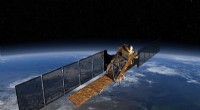
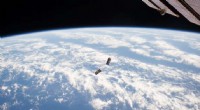
* Atmosphere: If a celestial body has a significant atmosphere, it can create drag on an orbiting object, causing it to lose energy and eventually fall into the body. This is why low Earth orbit (LEO) satellites eventually decay.
* Solar radiation pressure: Sunlight can exert a small, but measurable force on objects in space. This force can also cause orbital decay, especially on small objects.
Understanding these factors is crucial for launching satellites, planning space missions, and even understanding the evolution of planetary systems.