The Moon:
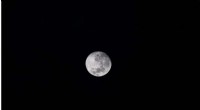
* Giant Impact Hypothesis: This is the most widely accepted theory for the Moon's formation. About 4.5 billion years ago, early Earth was struck by a Mars-sized object called Theia. The collision ejected a massive amount of material into orbit around Earth, which eventually coalesced into the Moon.
* Other Theories: While the Giant Impact Hypothesis is dominant, alternative theories exist, such as the capture theory (Earth gravitationally captured a pre-existing object) and the fission theory (the Moon spun off from Earth's early molten state).
Stars:
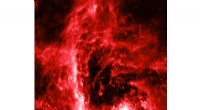
* Nebulae: Stars are born from giant clouds of gas and dust called nebulae. These clouds are mostly composed of hydrogen and helium, with trace amounts of heavier elements.
* Gravity and Collapse: Gravity pulls the particles in a nebula together, causing the cloud to contract and heat up. As the core of the nebula gets denser and hotter, it eventually reaches a temperature and pressure high enough to trigger nuclear fusion.
* Nuclear Fusion: Nuclear fusion is the process where hydrogen atoms fuse to form helium, releasing tremendous energy. This energy is what makes stars shine and provides the outward pressure that balances the inward pull of gravity, preventing the star from collapsing further.
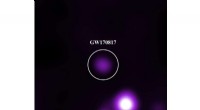
* Stellar Evolution: Stars go through different stages of evolution depending on their mass. Smaller stars like our Sun will spend billions of years burning hydrogen before becoming red giants and eventually white dwarfs. Larger stars will eventually explode in supernovas, leaving behind neutron stars or black holes.
Key Points:
* Cosmic Timeline: The formation of the Moon occurred relatively early in the solar system's history, while stars continue to be born in nebulae throughout the universe.
* Building Blocks: Both the Moon and stars are products of gravity and the process of nuclear fusion, which are fundamental forces in the universe.
* Continuous Evolution: The universe is constantly changing and evolving. Stars are born, live, and die, and their remnants can contribute to the formation of new stars, planets, and even moons.
Learning More:
* NASA's website: Provides excellent information on the Moon, stars, and the solar system.
* Space science textbooks and documentaries: Offer in-depth explanations and captivating visuals of the universe.
Remember, the study of the Moon, stars, and the universe is an ongoing journey. Scientists continue to make new discoveries that enhance our understanding of how these celestial bodies came to be.