Telescopes:
* Optical Telescopes: These collect visible light, allowing us to see the star's color, brightness, and sometimes even its surface features.
* Refracting Telescopes: Use lenses to bend light and focus it.
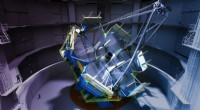
* Reflecting Telescopes: Use mirrors to reflect and focus light.
* Radio Telescopes: Detect radio waves emitted by stars, giving us insights into the star's magnetic field, the presence of gas and dust around it, and its internal processes.
* Infrared Telescopes: Detect infrared radiation, revealing the star's temperature, composition, and the presence of dust and gas.
* Ultraviolet Telescopes: Detect ultraviolet radiation, providing information about the star's atmosphere and surface activity.
* X-ray Telescopes: Detect X-rays, revealing hot regions and energetic processes on the star's surface.
* Gamma-Ray Telescopes: Detect gamma rays, the most energetic form of light, offering clues about powerful events like supernova explosions and black holes.
Other Instruments:
* Spectrographs: Split starlight into its component colors (a spectrum), allowing us to determine the star's chemical composition, temperature, and velocity.
* Interferometers: Combine the light from multiple telescopes, effectively creating a larger "virtual" telescope with increased resolution to study the star's surface details.
* Photometers: Measure the brightness of stars, enabling astronomers to study their variability and evolution.
* Astrometric Instruments: Measure the position and motion of stars with extreme precision, helping us understand their orbits and gravitational interactions.
Specialized Instruments:
* Adaptive Optics Systems: Compensate for atmospheric blurring, allowing ground-based telescopes to achieve sharper images of stars.
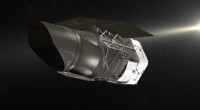
* Space Telescopes: Located above Earth's atmosphere, these telescopes avoid atmospheric interference and provide clearer views of stars across the electromagnetic spectrum.
These instruments work together, providing a comprehensive understanding of the properties, evolution, and behavior of stars in the universe.