While Andromeda is vast, it's not particularly known for its bright individual stars. Here are some of the more notable stars:
* Alpheratz (α Andromedae): The brightest star in Andromeda, it's a blue-white star about 97 light-years away. It's actually part of the Pegasus constellation, forming the top-left corner of the Great Square of Pegasus.
* Mirach (β Andromedae): A red giant star, about 200 light-years away. It's the second brightest star in Andromeda.
* Almach (γ Andromedae): This is a beautiful double star system, visible with binoculars. The primary star is a bright orange giant, while its companion is a blue-white star.
* 51 Andromedae: This is a sun-like star, hosting a confirmed exoplanet, 51 Andromedae b.
* R Andromedae: A long-period variable star, meaning its brightness varies over time. It can be easily seen with binoculars or a small telescope.
Other Stars of Note:
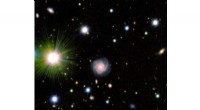
* The Andromeda Galaxy (M31): This is not a star, but a spiral galaxy visible with the naked eye under dark skies. It's a spectacular sight and arguably the most notable feature of the constellation.
* The Andromeda Stream: This is a faint stream of stars stretching out from the Andromeda Galaxy, visible in long-exposure photographs.
* NGC 7662: A beautiful globular cluster, located about 7,200 light-years from Earth. It's visible through binoculars or a telescope.
You can explore the constellation Andromeda and its stars using star charts, astronomy apps, or online resources.