Similarities:
* Formation: Both massive stars and the Sun form from collapsing clouds of gas and dust, primarily hydrogen and helium.
* Main Sequence Stage: Both stars spend the majority of their lives in the main sequence stage, fusing hydrogen into helium in their cores. This stage is fueled by nuclear fusion, generating energy that creates outward pressure balancing the inward pull of gravity.
* Energy Production: Both stars generate energy through nuclear fusion. However, massive stars fuse hydrogen much faster due to their higher core temperatures and pressures.
Differences:
* Lifespan: Massive stars burn through their fuel much faster than the Sun, having lifespans that can be millions of years compared to the Sun's billions of years.
* Evolutionary Stages: After the main sequence, massive stars undergo a series of dramatic and rapid transformations, including:
* Red Supergiant: They expand into red supergiants, fusing heavier elements in their cores.
* Supernova: Eventually, the core collapses, leading to a catastrophic supernova explosion.
* End State: Massive stars end their lives as either neutron stars or black holes, depending on their initial mass.
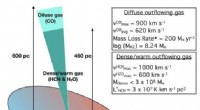
* Stellar Wind: Massive stars have much stronger stellar winds than the Sun, constantly losing mass throughout their lives.
In summary:
The early stages of massive stars and the Sun are quite similar, both being powered by hydrogen fusion. However, their vastly different masses lead to drastically different lifespans, evolutionary paths, and end states. The Sun will eventually become a white dwarf, while massive stars end their lives in spectacular supernovae, leaving behind neutron stars or black holes.