Evolution and Star Formation are Separate Processes:
* Evolution: This describes the process of biological change over time in living organisms. It's driven by natural selection and genetic variation.
* Star Formation: This is a process in astrophysics where massive clouds of gas and dust collapse under their own gravity, leading to the birth of stars.
Evolutionists Do Not Have Theories About Star Formation:
Evolutionary biologists study life on Earth. They do not have theories about the origin of stars, galaxies, or the universe.
How Stars Form:
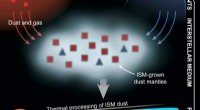
* Nebulae: Stars are born within giant clouds of gas and dust called nebulae.
* Gravitational Collapse: Gravity pulls the particles within a nebula closer together, causing the cloud to heat up and spin.
* Protostar: The core of the nebula becomes so hot and dense that it forms a protostar.
* Nuclear Fusion: When the core of the protostar reaches a critical temperature and pressure, nuclear fusion begins. This is the process where hydrogen atoms fuse to form helium, releasing immense energy and making the star shine.
Why This Isn't Unlikely:
The process of star formation is well-supported by scientific evidence and observation. Astronomers have witnessed the birth of stars in nebulae, and they can model the process using physics and computer simulations.
It's important to remember that evolution and astronomy are distinct fields of study, even though they both deal with the origins of things.